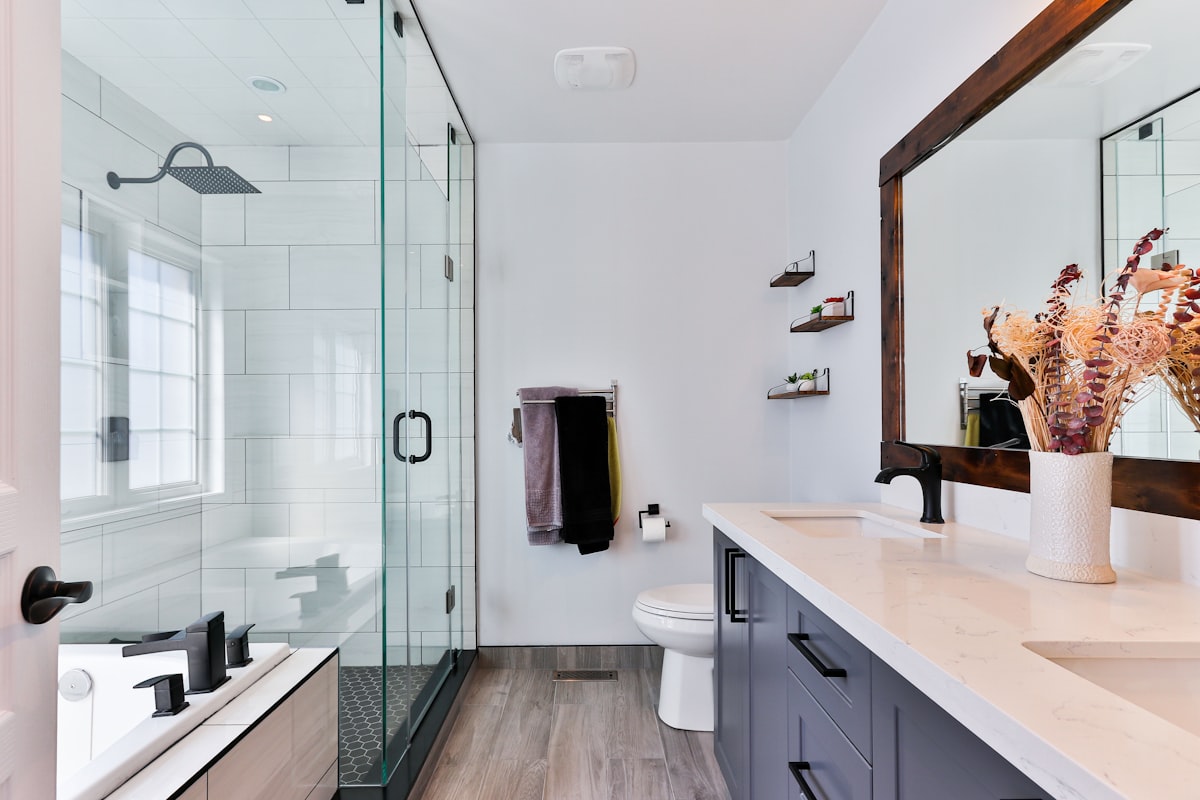
A custom home builder in Texas spent $9,500 with a local architectural firm to develop a 2,800-square-foot modern farmhouse plan. The home was completed on schedule, received widespread market praise, and sold within four days for a healthy 26% gross profit margin.
Two months later, the builder acquired an identical corner lot three blocks away. Recognizing that the farmhouse layout was perfectly suited for the parcel, the builder pulled out the approved blueprints, submitted them to the city with an updated site plan, and began pouring the foundation footings.
Three weeks into framing, the builder received a certified letter from the architect's intellectual property attorney.
The letter contained a formal cease-and-desist demand and a claim for federal copyright infringement. Because the builder used the plans on a second lot without paying a $5,500 "plan reuse licensing fee," the attorney demanded immediate payment of the reuse fee plus $25,000 in statutory damages. If the builder refused, the firm threatened federal litigation seeking disgorgement of all builder profits from the sale of the second home.
The builder was stunned. "I paid for the drawings in full. How do I not own them?"
In the American construction industry, this is one of the most common, costly legal traps developers and contractors face. The overwhelming majority of property owners and builders assume that paying a design invoice grants complete ownership of the plans. Under federal copyright law, that assumption is entirely false.
Whether you are a spec builder developing a subdivision or a property owner building an addition, this comprehensive guide answers the question: who owns architectural drawings, exposes standard contract licensing traps, and explains how to secure 100% ownership of your CAD files.
The Legal Baseline: US Copyright Law and Architectural Works
To understand who owns a set of construction drawings, you must understand how intellectual property law treats architectural design.
Before 1990, architectural drawings were protected only as technical drawings under the Copyright Act of 1976. This meant someone could not make physical photocopies of your blueprints, but they could legally walk through your finished building, measure the walls, and construct an exact duplicate without infringing copyright.
That changed on December 1, 1990, when the United States Congress enacted the Architectural Works Copyright Protection Act (AWCPA), codified in 17 U.S.C. Section 101 and Section 120.
| Copyright Protection Layer | Statutory Basis (US Code) | Scope of Legal Protection |
|---|---|---|
| Technical Drawings | 17 U.S.C. Section 102(a)(5) | Protects 2D CAD DWG files, vector PDFs, blueprints, and sketches from unauthorized copying or distribution |
| Architectural Work | 17 U.S.C. Section 102(a)(8) | Protects the physical 3D building design, spatial arrangement, and exterior form from unauthorized construction |
Under the AWCPA, architectural protection is dual-layered:
- The Drawings (Technical Representation): Protects the physical and digital documents (AutoCAD DWG files, PDFs, blue-lines) against unauthorized copying, distribution, or modification.
- The Building (The Physical Expression): Protects the three-dimensional design, spatial arrangement, exterior massing, and unique structural composition against unauthorized construction.
When Does Copyright Automatically Attach?
Under federal law, copyright protection attaches the millisecond a design is fixed in a tangible medium of expression.
The moment an architect or drafter draws a line on paper, saves an AutoCAD .dwg file, or exports a vector PDF, copyright ownership vests automatically in the author. Registration with the US Copyright Office is not required to create copyright ownership (although formal registration is required before filing a federal infringement lawsuit).
Most importantly: the transfer of money does NOT transfer copyright. Unless there is an explicit, written, signed agreement stating otherwise, the creator retains complete copyright ownership, regardless of who paid the bill.
The "Instruments of Service" Trap: How AIA Contracts Work
If the client does not automatically own the drawings, what did they actually pay for?
In traditional architecture, the answer is defined by the American Institute of Architects (AIA) standard form agreements, most notably AIA Document B101 (Standard Form of Agreement Between Owner and Architect).
Section 7.2 of AIA Document B101:
"The Architect and the Architect's consultants shall be deemed the authors and owners of their respective Instruments of Service, including the Drawings and Specifications, and shall retain all common law, statutory and other reserved rights, including copyrights."
Under standard AIA terms, blueprints, CAD models, and specifications are not goods sold to a customer. They are legally classified as "Instruments of Service" (tools used by the professional to execute their service).
| Contract Dimension | Traditional AIA Contract Standard | ArchWorkPro Ownership Standard |
|---|---|---|
| Legal Owner of Plans | The architect retains complete statutory copyright | The client / contractor receives full copyright assignment |
| Nature of Client Rights | Limited, non-exclusive, revocable license | Full, unrestricted, permanent ownership |
| Authorized Build Scope | One specific physical address, one time only | Unlimited builds across any location with zero reuse fees |
| File Deliverables | Flattened, read-only PDFs (DWGs withheld) | Clean, editable AutoCAD DWG source files + plot-ready PDFs |
| Subsequent Plan Reuse | Prohibited without costly licensing surcharges ($3,000 to $8,000+) | 100% Free; reuse the design as many times as you want |
| Right to Modify Layout | Prohibited without original architect's written consent | Full rights to modify, expand, or adapt for future clients |
What a "Single-Use License" Prohibits
When you sign a standard architectural agreement, you are purchasing a restrictive single-use license. This license strictly prohibits the builder or homeowner from:
- Building a Second Time: Constructing the exact same home, ADU, or garage conversion on a different lot.
- Modifying the Design: Hiring a secondary drafter or engineer to adjust room layouts, add an expansion, or update the roofline.
- Accessing Source CAD Files: Demanding editable DWG or Revit source files. The architect typically delivers only locked, flattened PDFs to prevent the builder from making independent changes.
- Transferring the Plans: Selling the plan set to another investor, developer, or family member.
If a contractor uses those drawings to build a second home, the architect can sue for federal copyright infringement. Under federal law, statutory damages can reach up to $150,000 per willful infringement, and courts can force the builder to surrender all net profits earned from the sale of the unauthorized building.
The "Work Made for Hire" Myth in Residential Construction
When caught in a plan ownership dispute, contractors often argue: "I hired the drafter to draw this for me. It was a work made for hire, so I own it automatically."
This is a dangerous legal misconception.
Under Section 101 of the US Copyright Act (17 U.S.C. Section 101), a design qualifies as a "Work Made for Hire" under only two strictly defined circumstances:
| Statutory Category | Creator Relationship | Legal Ownership Standard |
|---|---|---|
| Category 1: W-2 Employee | Salaried in-house drafter | Employer owns copyright automatically within scope of regular employment |
| Category 2: Specially Commissioned | Independent contractor / drafter | Creator retains copyright unless explicit written assignment agreement is executed |
Architectural works and technical drawings are NOT among the nine statutory categories enumerated under Category 2 of the Copyright Act.
Consequently, even if an independent architect or freelance drafter signs an agreement containing the phrase "work made for hire," federal courts have repeatedly ruled that the clause is legally invalid to transfer architectural copyright.
To legally transfer ownership from an independent design firm to a contractor, the contract must contain an explicit, written Assignment of Copyright, not merely a work-made-for-hire declaration.
Spec Home Builders: The Compounding Cost of Plan Reuse Surcharges
For production home builders, spec developers, and high-volume residential remodelers, restrictive design licenses represent a direct threat to business profitability.
Consider the math of a 10-home spec development using a traditional architectural firm versus an unencumbered drafting partner:
| Project Milestone | Traditional Architect Retainer Model | ArchWorkPro Full Ownership Model | Contractor Savings |
|---|---|---|---|
| Lot 1: Initial Custom Plan (2,500 sq ft) | $10,000 base design fee | $2,500 ($1.00/sq ft flat fee) | $7,500 |
| Lot 2: Plan Reuse Fee | $4,500 reuse licensing fee | $0 (unlimited reuse included) | $4,500 |
| Lot 3: Plan Reuse Fee | $4,500 reuse licensing fee | $0 (unlimited reuse included) | $4,500 |
| Lot 4: Plan Reuse Fee | $4,500 reuse licensing fee | $0 (unlimited reuse included) | $4,500 |
| Lot 5: Plan Reuse Fee | $4,500 reuse licensing fee | $0 (unlimited reuse included) | $4,500 |
| Lot 6: Plan Reuse Fee | $4,500 reuse licensing fee | $0 (unlimited reuse included) | $4,500 |
| Lot 7: Plan Reuse Fee | $4,500 reuse licensing fee | $0 (unlimited reuse included) | $4,500 |
| Lot 8: Plan Reuse Fee | $4,500 reuse licensing fee | $0 (unlimited reuse included) | $4,500 |
| Lot 9: Plan Reuse Fee | $4,500 reuse licensing fee | $0 (unlimited reuse included) | $4,500 |
| Lot 10: Plan Reuse Fee | $4,500 reuse licensing fee | $0 (unlimited reuse included) | $4,500 |
| Total Drafting & Licensing Expense | $50,500 | $2,500 | $48,000 |
By using an architect who retains copyright, the builder spends $50,500 across ten homes for the exact same set of construction drawings.
By partnering with ArchWorkPro, the builder pays a flat $1.00 per square foot ($2,500 total) for the initial CAD set, receives full copyright assignment, and reuses the plans across all ten lots with zero additional licensing fees, pocketing an extra $48,000 in gross margin.
To see how our transparent pricing structure protects builder margins across every project vertical, explore our drafting pricing.
Real-World Legal Precedents: The Risks of Unauthorized Plan Reuse
Federal courts strictly enforce the Architectural Works Copyright Protection Act. Contractors who treat architectural plans as public property face severe legal consequences:
1. Nelson-Salabes, Inc. v. Morningside Development (4th Cir. 2002)
A commercial developer hired an architectural firm to draft preliminary schematic drawings for an assisted living facility. When negotiations broke down over final construction administration fees, the developer terminated the architect, handed the preliminary drawings to a cheaper second architect, and constructed the facility.
The original architect sued for copyright infringement. The federal appeals court ruled that the developer never acquired ownership of the design. The court awarded the original architect hundreds of thousands of dollars in damages, including the developer's profits attributable to the building design.
2. Design Basics, LLC v. Several Midwest Home Builders (7th & 8th Cir.)
Design Basics, a national residential plan licensor, has filed hundreds of federal copyright lawsuits against custom home builders across the United States. In numerous cases, builders who purchased a single-build license for a stock house plan and subsequently built the plan two or three times were forced into six-figure settlements or faced trials seeking complete disgorgement of project profits.
The lesson for general contractors is clear: operating on verbal agreements or ambiguous design invoices leaves your construction business vulnerable to catastrophic litigation.
The ArchWorkPro Model: 100% Full Ownership and Assignment
ArchWorkPro was founded on a simple premise: builders and property owners should own what they pay for.
We reject the restrictive, predatory licensing models of traditional architectural firms. When you partner with ArchWorkPro for residential permit drawings, we operate on a complete, unencumbered intellectual property transfer model.
| Ownership Guarantee Pillar | What ArchWorkPro Guarantees | Contractor Practical Benefit |
|---|---|---|
| 1. Full Copyright Assignment | Total transfer of all statutory rights and title | Complete legal ownership of the architectural work |
| 2. Unlimited Plan Reuse | Zero reuse fees for future builds across any lot | Save $3,000 to $6,000+ per home in spec developments |
| 3. Unlocked CAD Deliverables | Clean, layered AutoCAD DWG source files + PDFs | Instant coordination with engineers and truss fabricators |
| 4. Unrestricted Modification | Full freedom to adapt or alter floor plans | Update layouts for future clients without asking permission |
| 5. Zero Hidden Surcharges | Flat $1.00/sq ft published pricing | No licensing audits, file transfer fees, or surprise bills |
What You Receive With ArchWorkPro:
- Full Legal Assignment: Upon settlement of your drafting invoice, ArchWorkPro assigns all statutory copyright and common-law intellectual property rights in the drawings directly to you.
- Clean, Unlocked CAD Deliverables: We deliver complete, layered, unencrypted AutoCAD
.dwgfiles alongside plot-ready vector PDFs. We never withhold source files or demand transfer fees. To learn more about our file standards, read our guide on DWG, PDF, or Revit architectural file formats. - Unlimited Plan Reuse: Build the exact same home, ADU, garage conversion, or addition on multiple properties with zero reuse penalties.
- Freedom of Trade Collaboration: Your structural engineers, MEP subcontractors, and truss fabricators can open, modify, and layer our CAD geometry without copyright restrictions.
Review our dedicated contractor services and builder partnership terms at our services for contractors portal.
The Contractor Playbook: Securing IP Ownership in Every Contract
If you hire external design professionals or freelance drafters, implement this 4-step legal checklist to protect your construction company:
| Step Number | Contractor Action Item | Legal Implementation Standard |
|---|---|---|
| Step 1 | Eliminate Default AIA Language | Strike Section 7.2 of AIA B101 or attach an explicit IP Ownership Addendum transferring all copyright upon payment. |
| Step 2 | Include an Explicit Assignment Clause | Use standard assignment language: "The Designer hereby irrevocably assigns, transfers, and conveys to the Client all right, title, and interest, including all statutory copyrights, in and to the drawings, specifications, and digital CAD files." |
| Step 3 | Contractually Mandate Editable DWG Deliverables | Specify in the scope of work that final payment is contingent on delivery of unencrypted, layered AutoCAD DWG files, not merely flattened PDFs. |
| Step 4 | Obtain Warranties of Non-Infringement | Ensure your drafting agreement includes an indemnification clause where the drafter warrants that the design is original and does not infringe on third-party copyrights. |
To see how professional permit drawings are structured to pass city reviews without friction, explore our comprehensive guides on what are permit drawings and building permit drawings for additions and remodels.
Frequently Asked Questions
Does paying for architectural drawings mean I own them?
No. Under the US Copyright Act and the Architectural Works Copyright Protection Act (AWCPA), the person or firm that drafts the design automatically owns the copyright. Paying an architectural invoice only gives you a license to use the drawings. Unless you have a signed, written agreement explicitly assigning copyright ownership to you, the designer retains full legal ownership.
Can I build the same house twice from one set of architectural plans?
Under standard architectural contracts and stock plan licenses, no. Most traditional contracts grant a single-use license restricted to one specific address. Building the same house on a second lot without paying a reuse fee constitutes federal copyright infringement. At ArchWorkPro, however, you receive complete ownership and can build the design as many times as you wish with zero reuse fees.
What happens if a contractor modifies an architect's plans without permission?
If a contractor or homeowner alters an architect's copyrighted plans without authorization, they can be sued for creating an unauthorized "derivative work" under 17 U.S.C. Section 106. In addition to potential copyright damages, modifying plans without the original designer's consent can void the professional liability coverage of the original design stamp.
Does ArchWorkPro charge a reuse fee if I build a plan on multiple lots?
Never. ArchWorkPro provides 100% unrestricted plan reuse rights. You pay our flat published drafting rate of $1.00 per square foot ($1,200 project minimum) once. You are legally free to build that design on five, ten, or fifty lots with zero additional licensing fees or royalites.
Can I trademark or copyright house plans drawn by ArchWorkPro?
Yes. Because ArchWorkPro assigns all statutory copyright and intellectual property rights to you upon project payment, you become the legal owner of the design. You have the right to register the architectural work with the United States Copyright Office under your company's name and protect it against unauthorized copying by competitor builders.
How can I legally transfer house plans to the buyer when I sell a custom home?
When you sell a home built from plans owned through ArchWorkPro, you can legally transfer copies of the plans and DWG files to the new homeowner for their maintenance, remodeling, and property records. Because you hold full ownership rights, you are free to grant licenses or transfer copies without seeking permission from ArchWorkPro.
Build an Independent Plan Catalog With 100% Owned CAD Drawings
Do not let restrictive architectural licenses, unexpected reuse penalties, and locked PDF files jeopardize your building margins. Partner with ArchWorkPro to get precision-drafted residential permit sets backed by 100% full copyright assignment and unlimited plan reuse rights for a flat $1.00 per square foot.
Request your written 2-hour quote today or review our pricing page to start drafting.